Keeping diesel safely on site
Farms, building sites, hauliers and plant yards often keep their own diesel on site.
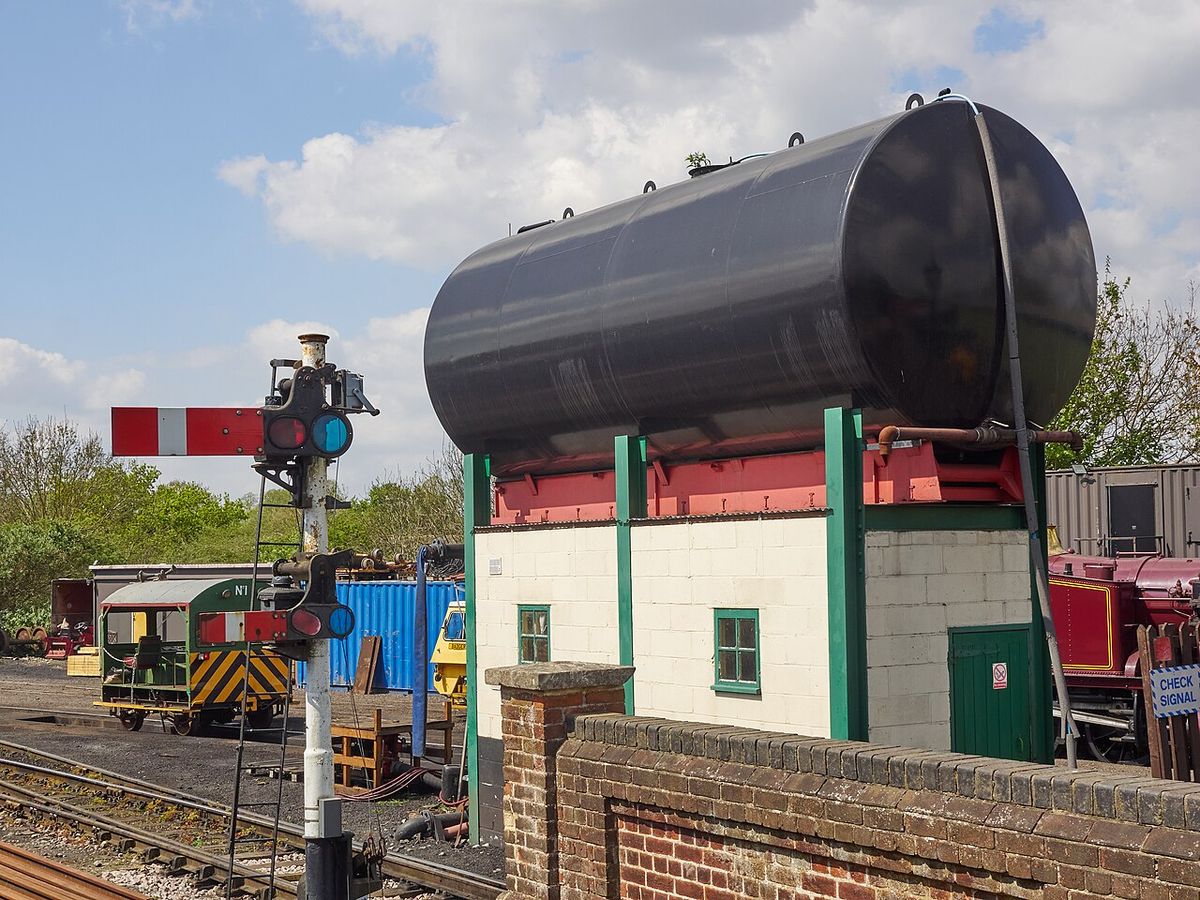
A well-built store keeps that fuel in the tank and out of the ground, drains and rivers. These notes set out the storage rules on GOV.UK for England and Wales.
When the rules apply
The rules cover businesses, including marinas, and public buildings such as schools and hospitals. They apply to each container that holds 201 litres or more. Homes come under the rules from 3,501 litres.
A container can be a fixed tank, an oil drum, an intermediate bulk container (IBC), a mobile bowser or some generators. Diesel, petrol, biofuels, kerosene and HVO are among the oils covered.
Some containers are exempt. They include underground tanks and containers kept inside a building with walls and a roof that would hold a leak. So are containers at premises that pass oil on for distribution, rather than selling it straight to the people who use it.
Bunds and drip trays
A bund is an outer case that holds the tank and catches any leak. Fixed tanks must be bunded. A drip tray is not enough for a fixed tank.
A bund must hold 110% of the tank's capacity. Where a bund holds several containers, it must hold 110% of the largest or a quarter of their combined capacity, whichever is greater. A drip tray under a drum must hold at least a quarter of the drum.
The bund must be impermeable to oil and water. Its base and walls must have no pipe, valve or opening that would let it drain. The tank itself must be strong enough not to burst or leak in ordinary use.
Where the tank goes, and its pipes
Owners must place a container where it is least likely to be hit, or protect it with barriers or bollards. Above-ground pipes need proper support.
A flexible delivery pipe must sit in a locked cabinet with a drip tray, or inside the bund with a lockable valve at the tank. If the tank or its vent pipe cannot be seen from the fill point, the tank needs overfill prevention. On a mobile bowser, any tap or valve that oil can leave through must be locked shut when it is not in use.
Fuel for farm machinery
Farms in England have their own rules for agricultural fuel oil, such as tractor fuel. They apply to a new or substantially changed store holding over 1,500 litres. No part of the store can be within 10 metres of inland or coastal waters, including yard drains, dry ditches and land drains.
The farmer must tell the Environment Agency at least 14 days before work starts. Diesel kept on a farm for other business uses, such as fuelling lorries, comes under the general business rules.
Red diesel since April 2022
In April 2022 the government took away the right to use red diesel from most sectors, including construction, mining and quarrying. Vehicles and machinery used in agriculture, horticulture, fish farming and forestry kept it. Rail and non-commercial heating kept it too.
When a supplier switches a tank from red to white diesel, it has to flush the tank and supply lines until no trace of the marked fuel remains.
If oil escapes
NetRegs, the environmental guidance service for Scotland and Northern Ireland, says oil spills account for a quarter of all pollution incidents in the UK.
In England, the Environment Agency's incident hotline is 0800 80 70 60, and it runs 24 hours a day. A business that breaks the storage rules could be fined or prosecuted. The Environment Agency can also serve an anti-pollution works notice.
Scotland and Northern Ireland have their own rules. NetRegs publishes the guidance for businesses there.
Useful links
- GOV.UK: oil storage regulations for businesses
- GOV.UK: storing silage, slurry and agricultural fuel oil
- GOV.UK: reform of red diesel and other rebated fuels entitlement
- GOV.UK: report an environmental incident
- NetRegs: oil storage
- NetRegs: environmental guidance for businesses in Northern Ireland and Scotland